Hollow Tiles After Installation: Causes and Prevention per Sika and MU TDS
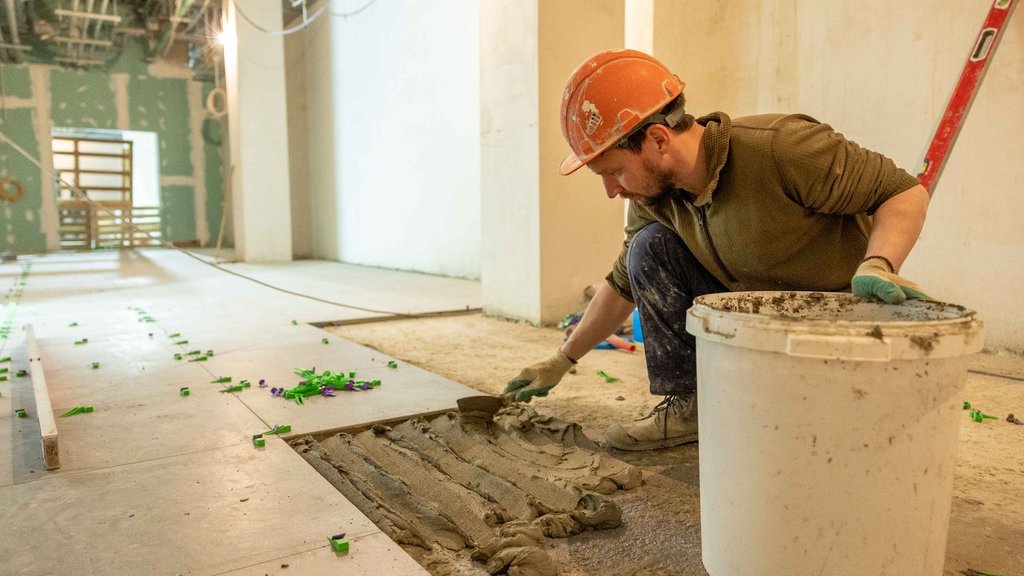
Hollow tiles after installation is among the most common floor complaints: neat on top, but a tap reveals a void. This article summarises two Sika Indonesia guides (11 May 2026 and 15 January 2026) on causes and the double spreading method, then checks them against the technical data sheets (TDS) of two adhesives: SikaCeram-180 GA TileFix (February 2025) and MU-420 CeraFix (issued 28 October 2021). The two Sika articles are manufacturer content that also promotes its products; we use them for technical points only and mark where no figures are given. Data as of 23 October 2026.
Hollow tiles after installation: causes per Sika and figures in the adhesive TDS
| Item | What the document says | Source | homeX note | Source |
|---|---|---|---|---|
| Cause 1: uneven base | A wavy cement base gives uneven adhesive thickness; in low spots the adhesive does not fill fully, leaving air voids; tiles can crack when stepped on | Sika Indonesia article (11 May 2026) | Both TDS below also ask for a flat substrate (MU-420: an uneven surface raises consumption) | Sika Indonesia |
| Cause 2: spot-applied adhesive | Adhesive applied only in spots or in the middle; air is trapped in the empty space and a hollow sound appears when tapped | Sika Indonesia article (11 May 2026) | The article gives no coverage percentage: data gap | Sika Indonesia |
| Cause 3: plain cement-sand mix | A cement and sieved-sand mix shrinks easily as it dries and bonds weakly; the effect is stronger in wet areas, outdoors and with large tiles | Sika Indonesia article (11 May 2026) | The shrinkage claim comes from an adhesive manufacturer article; no shrinkage figure is given | Sika Indonesia |
| Working method | Notched trowel (ridges let air escape), adhesive 3–6 mm depending on tile size, press gently or tap with a rubber mallet in a circular motion from centre outward; substrate clean, hard, dry; grout only after the adhesive has dried | Sika Indonesia article (11 May 2026) | The 3–6 mm figure is generic; product TDS state 2–3 mm (SikaCeram-180) and 2–10 mm (MU-420). Follow the TDS of the product used | Sika Indonesia |
| Double spreading | Adhesive combed with a notched trowel on the substrate and a thin coat on the tile back with the flat side (back-buttering); recommended for large tiles (examples 60×60 and 60×120 cm), granite, high-load areas and walls; check by gentle tapping or lifting one test tile | Sika Indonesia article (15 Jan 2026) | The article only says coverage "close to full" for high load or exterior, without a percentage | Sika Indonesia |
| SikaCeram-180 GA TileFix | 25 kg bag; water 6.25–7.0 L; thickness 2–3 mm; about 5.5 m² per bag; open time about 20 minutes (25°C, 75% RH); pot life about 1 hour (30°C); adhesion tensile strength about 0.8 N/mm² (28 days, EN 1348); wait about 24 hours before grouting; for walls with tiles larger than 30×30 cm an application test is advised | TDS SikaCeram-180 GA TileFix (Feb 2025, v02.01) | homeX calculation: 20 m² floor = 20 / 5.5 = 3.6, so 4 bags before waste; double spreading uses more adhesive and the TDS gives no figure for it | Sika Indonesia |
| MU-420 CeraFix | For porous tiles up to 40×40 cm (1,600 cm²); 25 kg bag; water 5.5–6.0 L; about 5 m² per bag at 3 mm; thickness 2–10 mm; bond strength above 0.5 N/mm² (28 days, EN 1348); open time 20 minutes; adjustability time 10 minutes; traffic after 24 hours; concrete, plaster and screed substrates need primer L500 or pre-roughening | TDS MU-420 CeraFix (issued 28 Oct 2021) | homeX calculation: 20 m² / 5 = 4 bags. The 40×40 cm limit means 60×60 tiles or large granite fall outside this TDS | Saint-Gobain Indonesia (MU) |
Source: Sika Indonesia guides "Penyebab Keramik Kopong setelah Dipasang dan Cara Menguranginya" (11 May 2026) and "Metode Double Spreading pada Pemasangan Keramik" (15 January 2026), TDS SikaCeram-180 GA TileFix (February 2025, v02.01), TDS MU-420 CeraFix (issued 28 October 2021; PDF copy on the East Java provincial site, not from the manufacturer site). Data gaps: neither Sika article gives a coverage percentage; we did not read any other body coverage standard; no data on how often hollow tiles occur in Indonesia; the two Sika articles are manufacturer content promoting its products; we did not check whether a newer MU-420 version than 2021 exists; prices not checked. Data as of 23 October 2026.
How to check for hollow spots before grouting
Sika suggests gentle tapping (a solid sound means good) and lifting one test tile to see adhesive coverage. homeX suggestion (analysis, not a quotation): do this on day one in each room, photograph the back of the lifted tile, and continue only if the adhesive covers almost the whole face. Mind the adhesive open time (about 20 minutes in both TDS): adhesive that has skinned over should not be used to set tiles.
When the adhesive does not suit the tile
Tiles of 60×60 cm and above and large granite exceed the MU-420 TDS limit (maximum 40×40 cm). SikaCeram-180 mentions granite, but for walls with tiles larger than 30×30 cm its TDS asks for an application test. The 11 May 2026 Sika article also names SikaCeram-255 Big Slab for large granite; we did not read that product TDS (data gap).
Buyer tips
- Choose the adhesive from its TDS, not its name: check maximum tile size, layer thickness and open time.
- Ask the tiler to use a notched trowel and, for large tiles or granite, double spreading.
- Lift one test tile in each room on day one and photograph its back.
- Wait about 24 hours before grouting as both product TDS say.
Request a hollow tiles after installation quote for your project
homeX can compare several brands at once and prepare a written quote for projects, renovations or shop stock. Send your needs (brand, size, quantity, location) via WhatsApp +62 821 1818 998, or visit the homeX showroom: Priskilla Tower, 6th floor, Jl. Atang Sanjaya No.21, Benda, Kota Tangerang, Banten 15125. Visit the homeX Showroom.
Disclaimer: prices change without notice and differ by store, city, pack size, grade and promotion. Data as of 23 October 2026; always confirm with the seller before buying.
FAQ
What causes hollow tiles after installation? Sika (11 May 2026) lists an uneven base, adhesive applied in spots or only in the middle so air is trapped, and plain cement-sand mix that shrinks easily. A plain cement spoon instead of a notched trowel and a dirty substrate are also named as factors.
What is double spreading for tiles? Adhesive is applied to the substrate and as a thin coat on the tile back (back-buttering) for more even contact and fewer air voids. Sika recommends it for large tiles, granite, high-load areas and walls.
How many m² does a 25 kg tile adhesive bag cover? Per TDS: SikaCeram-180 GA about 5.5 m² (2–3 mm thick) and MU-420 about 5 m² (3 mm thick). Actual figures depend on substrate flatness, trowel and whether double spreading is used.
Hollow tiles after installation: related articles and products
Related articles:
- How to Choose Floor Tiles: PEI Rating, Water Absorption and SNI ISO 13006
- Tile Adhesive Price in Indonesia 2026: MU, AM, Sika, Demix, Lemkra
- Tile Adhesive vs Sand-Cement: Cost per m² & Coverage 2026
- Tile & Granite Installation Cost per m² Indonesia 2026
- KW1, KW2, KW3 Ceramic Tiles in Indonesia: Meaning, Price Gap and Checks
Related products at homeX:
Price sources (checked 23 October 2026): Sika Indonesia — Knowledge hub: causes of hollow tiles and how to reduce them (11 May 2026); Sika Indonesia — Knowledge hub: double spreading method for tile fixing (15 Jan 2026); Sika Indonesia — Technical Data Sheet SikaCeram-180 GA TileFix (Feb 2025, v02.01); Saint-Gobain Indonesia (MU) — TDS MU-420 CeraFix (issued 28 Oct 2021; copy on the East Java provincial site).