Masonry Mortar Type M, S, N or O: SNI 6882 Strength and Wall Uses
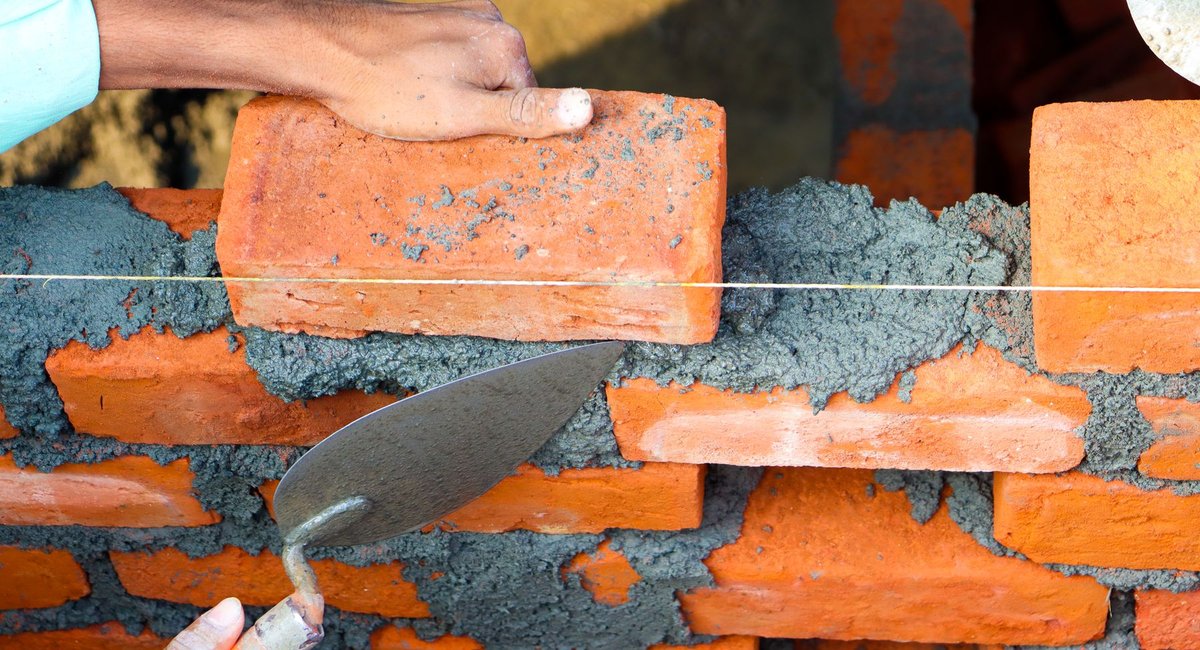
The letters M, S, N and O in a masonry mortar type are not brand codes but strength classes from SNI 03-6882-2002, which adopts ASTM C270. Type M mortar must reach an average 28-day compressive strength of at least 17.2 MPa, Type S 12.4 MPa, Type N 5.2 MPa and Type O 2.4 MPa. For ordinary house walls Type N is enough; Type S is used for foundations and below-grade work. The strongest type is not automatically better: the standard forbids swapping a specified type for a stronger one without knowing its properties.
Key Facts
- SNI 03-6882-2002 Table 2: minimum average 28-day compressive strength is 17.2 MPa for Type M, 12.4 MPa for Type S, 5.2 MPa for Type N and 2.4 MPa for Type O (masonry-cement mortar), with at least 75% water retention (2026-11-11, source: SNI 03-6882-2002 Specification of Mortar for Masonry (appendix copy, Politeknik Negeri Sriwijaya)).
- SNI 03-6882-2002 Table 1: aggregate is 2¼–3 times the combined volume of cementitious materials; Type M cement-lime mortar uses ¼ part hydrated lime per 1 part portland cement, Type O more than 1¼ up to 2½ parts (2026-11-11, source: SNI 03-6882-2002 Specification of Mortar for Masonry (appendix copy, Politeknik Negeri Sriwijaya)).
- SNI 03-6882-2002 clause 6.4: mortar more than 2.5 hours after mixing with water must not be used (2026-11-11, source: SNI 03-6882-2002 Specification of Mortar for Masonry (appendix copy, Politeknik Negeri Sriwijaya)).
- UPI study of mortar made by PT Beton Elemen Persada: average 28-day strength of 13–14 MPa, meeting Type S (≥ 12.4 MPa) under SNI 6882:2014/ASTM C270 (2026-11-11, source: Yusya et al., Jurnal Pendidikan Teknik Bangunan (UPI): compressive strength and type of industrial mortar).
- Brick Industry Association (Technical Note 8B, 2020): select the mortar type with the lowest compressive strength that meets project requirements; Type N for normal use (2026-11-11, source: Brick Industry Association: Technical Note 8B (2020)).
What masonry mortar types M, S, N and O mean in SNI 6882
SNI 03-6882-2002, the Indonesian specification of mortar for masonry, applies to reinforced and unreinforced brick or block work. It references ASTM C270 and recognises four mortar types. A recent study in a UPI journal cites the revised edition, SNI 6882:2014, which remains aligned with ASTM C270.
A mortar can be specified in two ways. Under the proportion specification, cement, lime and sand follow Table 1. Under the property specification, the mortar is tested in a laboratory and must meet Table 2. If the contract names neither, the proportion specification applies. In Table 2 the minimum average 28-day compressive strength is 17.2 MPa for Type M, 12.4 MPa for Type S, 5.2 MPa for Type N and 2.4 MPa for Type O (2.5 MPa for cement-lime mortar). All types also need at least 75% water retention, and cement-lime mortar may contain at most 12% air for Types M and S and 14% for Types N and O.
Cement, lime and sand by mortar type
In the proportion specification the type is set mainly by the amount of lime. Type M cement-lime mortar uses ¼ part hydrated lime for each part of portland cement, while Type O uses more than 1¼ and up to 2½ parts of lime. Sand, measured damp and loose, is 2¼–3 times the combined volume of cementitious materials. The standard's appendix shows a 1 cement : 1¼ lime : 6¾ sand mix converted to 332 g cement, 215 g lime and 2,500 g sand for one test batch.
The standard also gives bulk densities for site batching: portland cement 1,250 kg/m³, hydrated lime 650 kg/m³ and damp loose sand 1,200 kg/m³. These help turn bucket measures into weights.
Choosing a mortar type for house walls
Appendix B of SNI 03-6882-2002 gives general guidance. Exterior load-bearing walls above grade: Type N, with S or M as alternatives. Foundations, below-grade walls, wells and manholes: Type S, with M or N as alternatives. Interior load-bearing walls: Type N, while non-load-bearing partitions: Type O. The table does not apply to chimneys, reinforced masonry or acid-resistant mortar.
The Brick Industry Association follows the same principle: select the type with the lowest compressive strength that still meets project requirements. Its technical note describes Type N as a general all-purpose mortar with good bond and workability, Type S as having higher compressive and flexural bond strength, Type M as high-strength but not very workable, and Type O as a low-strength mortar mostly for interiors and restoration. The SNI itself states that where a lower-strength mortar is specified, a stronger one must not be substituted without knowing its properties.
Pre-mixed mortar and the effect of water
For pre-mixed (instant) mortar, ask the maker for 28-day compressive strength data and compare it with Table 2. A study in UPI's Jurnal Pendidikan Teknik Bangunan tested mortar produced by PT Beton Elemen Persada at two water doses, 8.2 litres and 9 litres per 50 kg. Average strength reached 13–14 MPa at 28 days, which falls into Type S. The 8.2-litre dose gave a denser, stronger mortar, while 9 litres was easier to work but weaker. Adding water beyond the bag instructions can therefore drop the mortar's class.
Mixing and site-use rules
SNI 03-6882-2002 calls for mechanical mixing for 3–5 minutes; hand mixing needs written permission. Mortar that starts to stiffen may be retempered to keep workability, but mortar more than 2.5 hours after mixing with water must not be used. Admixtures such as accelerators may not be added unless specified, and calcium chloride is capped at 2% of portland cement weight and must be clearly stated in the contract. The homeX team can help match the mortar type on working drawings with available pre-mixed products.
masonry mortar type: related articles and products
- SNI 8640 AAC blocks: class I/II, minimum strength and sizes
- Dry-mix mortar price in Indonesia 2026: MU, SCG, AM, Demix, Lemkra
- Acian, plamir and skim coat: when to use each and thickness
- homeX building materials catalog
FAQ
What is the compressive strength of Type S mortar? Under SNI 03-6882-2002 Table 2, Type S mortar must reach an average of at least 12.4 MPa at 28 days, with at least 75% water retention.
Which mortar type for stone foundations or below-grade walls? Appendix B of SNI 03-6882-2002 recommends Type S, with Type M or N as alternatives.
How long can mixed mortar be used? Mortar more than 2.5 hours after mixing with water must not be used, according to clause 6.4 of the standard.
For building and renovation material needs, reach the homeX team on WhatsApp +62 821 1818 998, by email at homex9998@gmail.com or through our contact page.
Sources: SNI 03-6882-2002 Specification of Mortar for Masonry (appendix copy, Politeknik Negeri Sriwijaya); Yusya et al., Jurnal Pendidikan Teknik Bangunan (UPI): compressive strength and type of industrial mortar; Brick Industry Association: Technical Note 8B (2020)