Rainwater Infiltration Well SNI 8456:2017: Size, Distances and Formulas
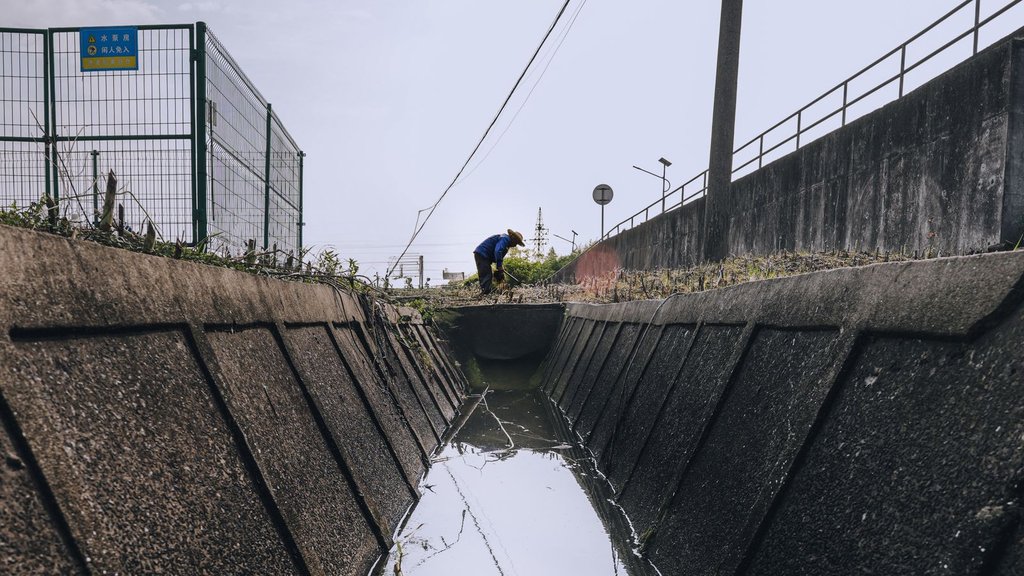
Rainwater infiltration well SNI 8456:2017: wells may only be built where the water table is deeper than 2 m and the soil permeability coefficient exceeds 2.0 cm/h. The cross-section is square or circular with 80–100 cm sides. This article summarises the rainwater infiltration well size, distances from buildings, depth formula and worked examples from the standard text we read on 23 October 2026, then adds a homeX calculation for a 60 m2 roof.
Rainwater infiltration well SNI 8456:2017: requirements, formulas, distances and examples
| Item | Value in the standard | Basis | homeX note | Source |
|---|---|---|---|---|
| Water table | Infiltration well: water table >2 m; infiltration trench: water table ≤2 m | Clause 4.2 a) and 5.2 c) | Measure in the rainy season | SNI 8456:2017 (salinan pdfcoffee) |
| Well section and side | Square or circular; 80–100 cm sides | Clause 4.2 b) and c) | Other shapes allowed if easy to build | SNI 8456:2017 (salinan pdfcoffee) |
| Soil permeability | Must exceed 2.0 cm/h. Medium 2.0–3.6 cm/h (silt); moderately fast 3.6–36 (fine sand); fast >36 (coarse sand) | Clause 4.2 d); percolation test at 2–3 m depth (well), 2 m (trench) | Clay is usually below this limit; the standard gives no clay figure | SNI 8456:2017 (salinan pdfcoffee) |
| Runoff and coefficient | Q = C x I x A; C = 0.95; roof area = horizontal projected area; design rain 2-hour duration, 2-year return period | Clause 4.2 f) to i); intensity I = (R24/24) x (24/t)^(2/3) | A pitched roof uses plan area, not sloped surface area | SNI 8456:2017 (salinan pdfcoffee) |
| Well depth formula | H = Q / (ω x π x r x K); ω = 2 (empty with sealed wall, or no wall with stone fill); ω = 5 (empty with porous wall) | Equation (2); the π term is confirmed by the worked example in Annex A | The PDF text we read had a garbled formula; we checked it against the Annex A example | SNI 8456:2017 (salinan pdfcoffee) |
| Trench length formula | B = Q2 / (β x b x H2 x K2); β = 16 (sealed or stone-filled); β = 40 (porous wall) | Equation (3) | Very long in silty soil; see the examples below | SNI 8456:2017 (salinan pdfcoffee) |
| Inlet, overflow and vent pipes | Well: PVC min 3 in; trench: PVC min 4 in or half-round concrete pipe Ø30 cm; vent PVC ½ in | Clause 4.2 l) and m) | See the homeX PVC pipe article | SNI 8456:2017 (salinan pdfcoffee) |
| Minimum distances (Table 1) | Building foundation: 1 m (well) and 1 m (trench); septic infiltration: 5 m and 5 m; drinking-water well: 3 m (well) | Table 1; values read in sequence from PDF text with a garbled table layout | Re-check these figures in the official BSN copy before building | SNI 8456:2017 (salinan pdfcoffee) |
| Standard example: 100 m2 roof, silt, K = 0.02 m/h | Q = 2.66 m3/h. Sealed wall: H = 21.2 m, built as 8 wells x 3 m. Porous wall: H = 8.5 m, built as 3 wells x 3 m | Annex A (Bandung data, R24 = 129 mm/day) | The example uses r = 1.0 m as input, though the text mentions a 1.0 m diameter | SNI 8456:2017 (salinan pdfcoffee) |
| Standard example: fine sand, K = 0.036 m/h | Sealed wall: H = 11.8 m (4 wells x 3 m). Porous wall r = 0.8 m: H = 5.88 m (2 wells x 3 m) | Annex A | The more porous the soil and wall, the fewer wells | SNI 8456:2017 (salinan pdfcoffee) |
| Standard example: trench length (0.8 m wide, 1 m deep) | Silt: 1,320 m (sealed) / 528 m (porous). Fine sand: 408 m / 163 m. Coarse sand (0.4 m wide, 0.6 m deep): 23 m | Annex A | homeX recalculation with Q = 2.66 gives about 1,382 m, 553 m, 427 m, 171 m and 24 m; the standard example uses Q2 = 6.76 | SNI 8456:2017 (salinan pdfcoffee) |
| homeX calculation: 60 m2 roof (plan), I = 28.17 mm/h, r = 0.5 m | Q = 1.61 m3/h. Silt (0.02): sealed 25.6 m, porous 10.2 m. Fine sand (0.036): sealed 14.2 m, porous 5.7 m | homeX analysis using the standard Bandung rain data; not a design | Number of 3 m wells: 9 / 4 / 5 / 2; your local rain may differ | SNI 8456:2017 (salinan pdfcoffee) |
Source: the text of SNI 8456:2017 (copy on pdfcoffee.com, a secondary source) read on 23 October 2026, with Annex A; some tables and formulas in the PDF text were garbled, so we matched them against the worked example and SNI 2398:2017 (5 m distance). Data gaps: the design rainfall R24 for your area is not in the standard apart from the Bandung example; the standard example uses Q2 = 6.76, which does not exactly match Q = 2.66; no cost figures. Consult a professional and local rules before design.
When does a trench make more sense than a well?
homeX analysis, not data. In the standard example a trench in silty soil needs hundreds to over a thousand metres, while in coarse sand only 23 m. A trench is therefore practical in very porous soil or when the water table is shallow (≤2 m); in silt, deeper or multiple wells are usually more realistic.
Materials, pipes and equipment needed
The standard lists earth-wall, perforated brick or block, concrete ring and porous concrete ring construction types. Prepare 3–4 in PVC pipe for the downpipe to the well; pipe and water tank prices are in the related homeX articles. We did not find verified concrete ring prices.
Buyer tips
- Run a percolation test at 2–3 m depth before digging.
- Keep 5 m from septic infiltration and 1 m from the foundation.
- Fit a vent pipe and a screen so the downpipe does not foul the well.
- Use the roof plan (projected) area, not the sloped surface area.
Request a rainwater infiltration well SNI 8456 quote for your project
homeX can compare several brands at once and prepare a written quote for projects, renovations or shop stock. Send your needs (brand, size, quantity, location) via WhatsApp +62 821 1818 998, or visit the homeX showroom: Priskilla Tower, 6th floor, Jl. Atang Sanjaya No.21, Benda, Kota Tangerang, Banten 15125. Visit the homeX Showroom.
Disclaimer: prices change without notice and differ by store, city, pack size, grade and promotion. Data as of 23 October 2026; always confirm with the seller before buying.
FAQ
How big is a rainwater infiltration well? SNI 8456:2017: square or circular section with 80–100 cm sides; depth is calculated from runoff, radius and soil permeability.
How far should an infiltration well be from the foundation? Table 1 of the standard (read from PDF text): 1 m from the building foundation, 5 m from septic infiltration and 3 m from a drinking-water well. Re-check in the official copy.
Is every soil suitable for an infiltration well? No. Permeability must exceed 2.0 cm/h and the water table must be deeper than 2 m; otherwise the standard does not allow an infiltration well.
Rainwater infiltration well SNI 8456: related articles and products
Related articles:
- Bio Septic Tank Prices 2026: Pennyu PB6/PB12 & Penguin 1000 L
- Well Drilling Cost per Metre 2026: 20-60 m Packages and Pump Installation
- Clean Water Pipe Installation Cost 2026: per Point and per Metre
- PVC Pipe for Homes: AW vs D Class, SNI 06-0084-2002, Jointing and Pressure Testing
- Water Tank Price Indonesia 2026: Penguin, Profil Tank, Mpoin
Related products at homeX:
Price sources (checked 23 October 2026): SNI 8456:2017 (salinan pdfcoffee) — Rainwater infiltration wells and trenches for yards (copy); SNI 2398:2017 (BSN, salinan PDF) — Septic tank with advanced treatment (5 m distance).