Welding Electrode Code E6013 vs E7018: AWS A5.1 Digits and Storage
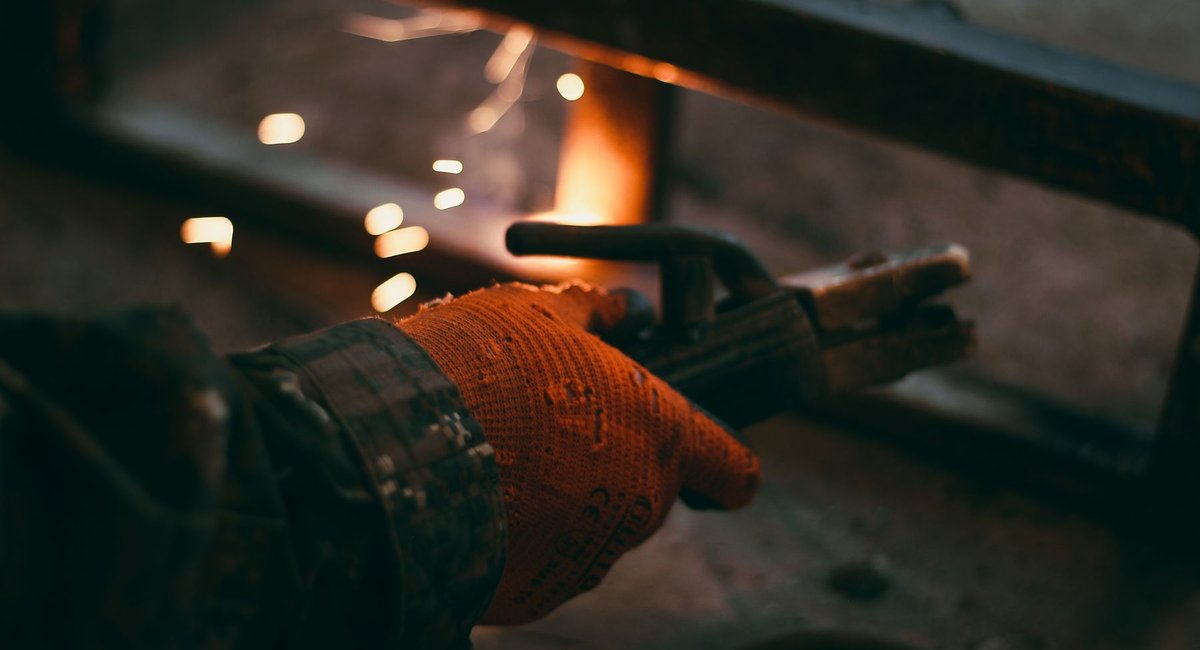
A welding electrode code such as E6013 or E7018 is read under AWS A5.1: E stands for electrode, the first two digits give the weld metal's minimum tensile strength in thousands of psi, the third digit gives the welding position, and the last two digits give the coating type and current. For fences, canopies and window grilles, E6013 is chosen for its soft arc and easy AC use; E7018 is a low-hydrogen electrode for structures where quality matters, but it must be stored dry and oven-baked before use. This guide summarises Lincoln Electric, Hobart and Nikko Steel product sheets.
Key Facts
- Lincoln Electric: prefix E = arc welding electrode; first two digits = minimum tensile strength (E6010 = 60,000 psi); a "1" in third position = all positions, "2" = flat and horizontal only (2026-11-10, source: Lincoln Electric: AWS Classifications).
- Lincoln Electric: final digit 3 = high titania potassium coating (AC, DC+); 8 = low hydrogen potassium with iron powder (AC, DC+ or DC−) (2026-11-10, source: Lincoln Electric: AWS Classifications).
- Nikko Steel RD-260: classified AWS A5.1 E6013 / EN ISO 2560-A E 35 0 R / JIS Z 3211 D4313; for low-to-medium carbon steel up to 15 mm; if damp, re-dry at 110°C for 1 hour (2026-11-10, source: Nikko Steel: RD-260 electrode (AWS A5.1 E6013)).
- Nikko Steel NK-7018 (AWS A5.1 E7018): 70–110 A (2.5 mm), 90–150 A (3.2 mm), 140–200 A (4.0 mm), 180–250 A (5.0 mm); dry at 350–400°C for 30–60 minutes before use (2026-11-10, source: Nikko Steel: NK-7018 (AWS A5.1 E7018)).
How to read an AWS A5.1 welding electrode code
Lincoln Electric explains the AWS numbering system for stick (SMAW) electrodes. The prefix E marks an arc welding electrode. In a four-digit code the first two digits give minimum tensile strength: E6010 means 60,000 psi, while in a five-digit code such as E10018 the first three digits mean 100,000 psi. The next-to-last digit gives position: "1" for all positions, "2" for flat and horizontal only, and "4" for flat, horizontal, vertical-down and overhead. The last two digits are read together for the coating type and correct current.
Hobart Brothers stresses that AWS classifications let users understand a product's properties without knowing the trade name. If the main brand runs out, another brand with the same AWS classification has the same chemical and mechanical properties, though arc feel may differ slightly. Hobart also explains optional suffixes: "1" for improved toughness and ductility, "H" for diffusible hydrogen testing and "R" for the absorbed moisture test.
E6013: a rutile electrode for thin plate and general work
In E6013, 60 means a minimum tensile strength of 60,000 psi, 1 means all positions, and the final 3 means a high titania potassium coating usable on AC or DC+. Lincoln describes E6013 as an all-position electrode for welding clean, new sheet metal, with a soft arc, minimal spatter, moderate penetration and easy-to-clean slag. That suits home jobs such as hollow-section fences, grilles, steel racks and light canopies.
A local example is Nikko Steel RD-260, classified AWS A5.1 E6013, EN ISO 2560-A E 35 0 R and JIS Z 3211 D4313. Nikko says it suits all positions except vertical-down, on low-to-medium carbon steel up to 15 mm thick, with a stable arc on both AC and DC. If the electrodes become damp, Nikko asks for re-drying at 110°C for 1 hour.
E7018: a low-hydrogen electrode for structures
In E7018 the minimum tensile strength rises to 70,000 psi, still all-position, and the final 8 means a low hydrogen potassium coating with iron powder. Lincoln says E7018 is used when quality is an issue or for hard-to-weld metals, giving more uniform weld metal and better impact properties below zero. Nikko Steel NK-7018 is aimed at heavy structures, shipbuilding, boilers, storage tanks, pressure vessels and thick 50 kgf/mm² high-tensile plate, on AC or DCEP.
On building projects, the choice of structural electrode follows the welding procedure specification (WPS) and the designer's drawings, not just the welder's habit. homeX can help match the AWS classification on the box to the project specification before purchase.
How to store and bake low-hydrogen electrodes
Lincoln warns that low-hydrogen coatings that pick up moisture can cause porosity and hydrogen-induced cracking. Opened cans should be kept in a heated cabinet at 120–150°C, and standard EXX18 electrodes issued to welders twice per shift. For E7018 exposed to air for less than a week with no direct water contact, the final redrying temperature is 340–400°C; do not dry above the stated temperature. Nikko gives 350–400°C for 30–60 minutes for NK-7018. By contrast, Lincoln gives a final redry of 150–180°C for 20–30 minutes for the E6013 group—much lower. Baking E6013 at E7018 temperatures can damage the coating.
welding electrode code: related articles and products
- Welding machine price Indonesia 2026: Zehn inverter, genset, electrodes
- Iron fence installation cost per metre 2026: hollow, welding and paint
- Bolt grades 4.6, 8.8, 10.9 and 12.9 under ISO 898-1
- homeX building materials catalog
FAQ
What do 60 and 70 mean in a welding electrode code? Minimum weld-metal tensile strength in thousands of psi: E6013 = 60,000 psi, E7018 = 70,000 psi (Lincoln Electric).
What amperage for a 3.2 mm E7018 electrode? Nikko Steel NK-7018 lists 90–150 A for 3.2 mm and 70–110 A for 2.5 mm, on AC or DCEP.
Does E6013 need oven drying? Not routinely. Nikko RD-260 is re-dried at 110°C for 1 hour if damp; Lincoln gives 150–180°C for 20–30 minutes for the E6013 group, far below E7018 temperatures.
For building and renovation material needs, reach the homeX team on WhatsApp +62 821 1818 998, by email at homex9998@gmail.com or through our contact page.
Sources: Lincoln Electric: AWS Classifications; Hobart Brothers: Basics of AWS Filler Metal and Stick Electrode Classification (updated 5 May 2025); Lincoln Electric: Storing and Redrying Electrodes; Nikko Steel: RD-260 electrode (AWS A5.1 E6013); Nikko Steel: NK-7018 (AWS A5.1 E7018)