Building Materials Product Data Is Still Fragmented: 2026 Supply Chain Research
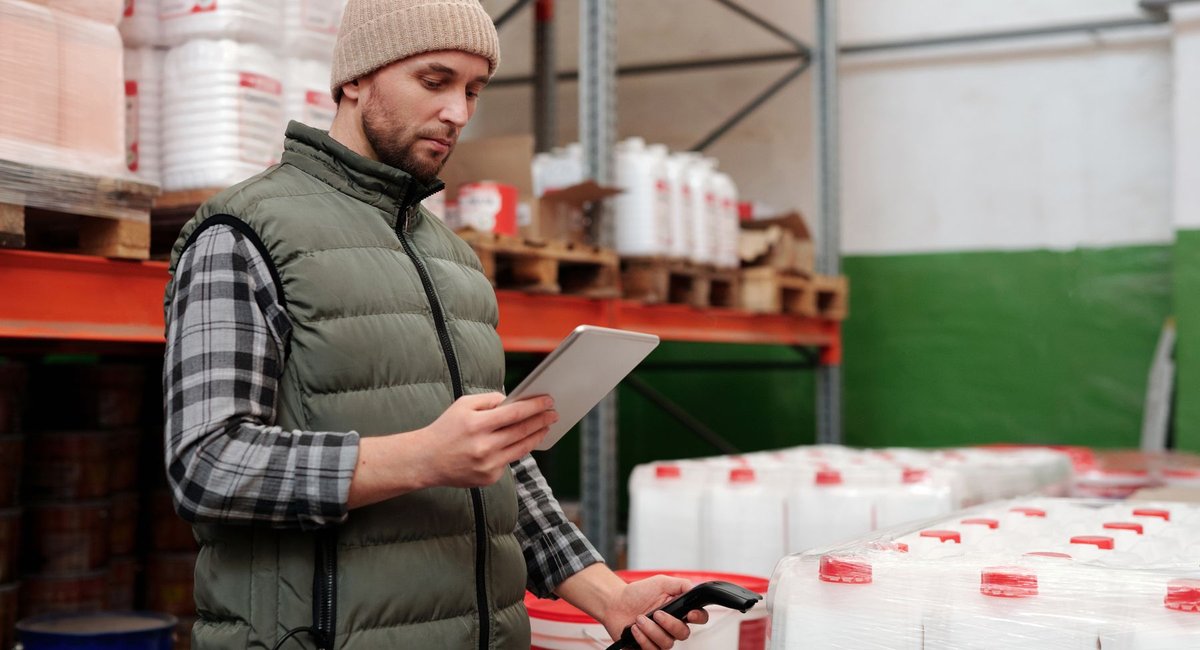
The main problem in digitalising Indonesian building materials distribution is no longer whether apps exist. According to Mitra Material research updated on 13 October 2026, building materials product data is already kept in ERP, WMS, POS and catalogues, but its meaning does not survive the trip from factory to distributor, shop and customer. As a result, a stock figure on screen is still confirmed by phone before a shop dares to promise it to a buyer.
Key Facts
- Mitra Material research published 21 September 2026 and updated 13 October 2026, covering product work since 2022 (2026-10-13, source: Mitra Material Bangunan, research "Why Building Materials Digitalisation Remains Fragmented" (published 21 Sep 2026, updated 13 Oct 2026)).
- Example in the research: one tile is called "white marble" by the customer, Nouville Light Gris by the shop and G60NVL-LGS by the distributor and factory (2026-10-13, source: Mitra Material Bangunan, research "Why Building Materials Digitalisation Remains Fragmented" (published 21 Sep 2026, updated 13 Oct 2026)).
- The research proposes a Time to Trusted Answer measure: the time until a stock answer is reliable enough to promise (2026-10-13, source: Mitra Material Bangunan, research "Why Building Materials Digitalisation Remains Fragmented" (published 21 Sep 2026, updated 13 Oct 2026)).
- A study at PT Siam Cement Group Yogyakarta found the blockchain-based RMC NET system improved visibility and traceability but did not directly build supplier trust (2026-10-21, source: Golden Ratio of Mapping Idea and Literature Format, blockchain study at PT Siam Cement Group Yogyakarta (21 Oct 2026)).
- The Gudang 731 marketplace launched in Gorontalo on 26 July 2026 to connect distributors, hardware stores, contractors and small firms (2026-07-26, source: Dizen.id, launch of the Gudang 731 marketplace (26 Jul 2026)).
Building materials product data: the tech exists, the information breaks
The research titled "Why Building Materials Digitalisation Remains Fragmented" rejects the idea that the industry has not adopted technology. Its thesis: technology is used locally, but the information does not stay interoperable. Factories run ERP and quality systems, distributors run WMS, shops run POS and customers use chat. Each works well inside its own organisation, but data does not connect between them. The research calls this pattern "digital islands".
The authors also note that a group owning factories, distribution and retail at once does not automatically have integrated data. Information can still break between head office and branches, or between the warehouse and sales.
One product, many names
The example will be familiar to tile buyers. A customer arrives with a photo and asks for "white marble". The shop knows it as Nouville Light Gris, while the distributor and factory use the code G60NVL-LGS. An experienced person knows all three are the same item, but a computer sees three different things.
The research separates three tasks that are often confused: confirming two names refer to the same product, finding similar products, and judging whether another product can be a substitute. Similar patterns may differ in size, surface, shade or batch.
Six ways information changes on the way
- Name changes: the factory name becomes a warehouse abbreviation, then a shop nickname.
- Unit changes: the factory records boxes, the shop sells pieces, the project counts square metres.
- Lost time: a stock figure is visible but not when it was confirmed.
- No access: the receiver only gets a screenshot.
- Lost origin: it is unclear who reported it and for which warehouse.
- Must be confirmed: digital data still ends in a phone call.
An example from the research: a file says 400 boxes are available, but not when it was updated, which warehouse holds them or whether they are already allocated. The number is precise; the certainty is not. The authors therefore propose a Time to Trusted Answer measure. A system may reply in eight seconds, but if a promise is only safe after a confirmation twelve minutes later, the time that matters is twelve minutes.
The research is open about its limits. It is a retrospective note from a company that also builds the technology, not a survey representing the whole industry, and its hypotheses have not yet been field tested.
Not only a technology problem
Another study at PT Siam Cement Group Yogyakarta, published on 21 October 2026, looked at the blockchain-based RMC NET system. Visibility, traceability and decision speed improved. Supplier trust, however, depended more on track record, consistency and direct communication. This matches the Mitra Material view that barriers can be technical, institutional or economic.
New platforms also keep appearing. The Gudang 731 marketplace was launched in Gorontalo on 26 July 2026 to bring distributors, suppliers, hardware stores, contractors and small businesses into one digital catalogue.
What it means for buyers and contractors
- When you get stock information, ask when it was checked and from which warehouse.
- Record the factory product code, not only the shop's trade name, especially for tiles and granite.
- For large orders, ask for one batch and shade in a single delivery.
- Agree on units from the start: boxes, pieces or square metres.
homeX, a one-stop building materials and furniture platform with a showroom, warehousing and delivery, faces the same challenge, so clear product codes, units and stock status are an important part of the service.
building materials product data: related articles and products
- B2B building materials platforms and supply chain digitalisation
- Cement supply chain digitalisation: AksesToko and 63,000 shops
- Steel mill digitalisation: e-ordering and AI
- homeX building materials catalog
FAQ
Why is stock in a hardware store app often still checked by phone? According to the Mitra Material research, stock figures often lack the update time, warehouse location and allocation status, so shops confirm with someone they trust before promising.
What is Time to Trusted Answer? A measure proposed by the research: the time from a question until the answer is reliable enough to commit to, not just until it appears on screen.
Does blockchain automatically make suppliers more trusted? The SCG Yogyakarta study found it does not directly. Blockchain improved visibility, but trust depended more on track record, consistency and communication.
For building and renovation material needs, reach the homeX team on WhatsApp +62 821 1818 998, by email at homex9998@gmail.com or through our contact page.
Sources: Mitra Material Bangunan, research "Why Building Materials Digitalisation Remains Fragmented" (published 21 Sep 2026, updated 13 Oct 2026); Golden Ratio of Mapping Idea and Literature Format, blockchain study at PT Siam Cement Group Yogyakarta (21 Oct 2026); Dizen.id, launch of the Gudang 731 marketplace (26 Jul 2026)