Wood Glue Classes D1 to D4: What EN 204 Means and How to Choose
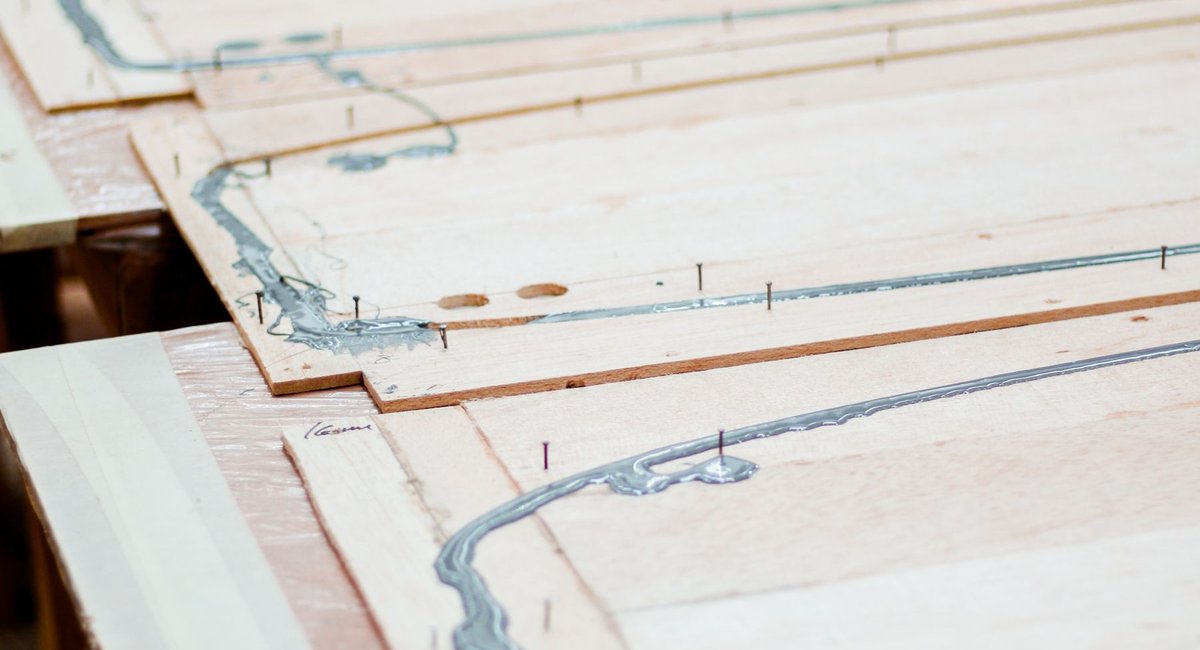
Wood glue durability class codes D1, D2, D3 and D4 on PVAc (white glue) labels come from the European standard EN 204 and answer one question: how well a glued joint stands up to water and humidity. D1 is for dry interiors only, D2 for interiors with occasional wetting, D3 for interiors that get wet often or exteriors not exposed to weather, and D4 for long-term water exposure or exteriors protected by a coating. For a kitchen cabinet near the sink or a bathroom door frame, D3 is a sensible minimum.
Key Facts
- EN 204:2016 Table 1: D1 is for interiors where wood moisture content stays at or below 15%; D2 for interiors with occasional wetting and wood moisture up to 18%; D3 for interiors with frequent wetting and exteriors not exposed to weather; D4 for long-term water exposure and coated exteriors (2026-11-11, source: CEN: EN 204:2016 (SIST EN 204:2016 preview, iTeh)).
- EN 204:2016 Table 2: every class must reach at least 10 N/mm² bond strength after 7 days in standard atmosphere; D3 at least 2 N/mm² tested wet after 4 days in water; D4 at least 4 N/mm² after 4 days in water and after 6 hours in boiling water (2026-11-11, source: CEN: EN 204:2016 (SIST EN 204:2016 preview, iTeh)).
- OSTERMANN: most wood glues reach D2 or D3; some D3 glues reach D4 only when combined with a hardener (2026-11-11, source: OSTERMANN: Fundamentals – glues and adhesives).
- Lem Fox PVAc Super D3-DN is rated D3 for water resistance under EN 204/205, has 50% solids and is used at 6–12% wood moisture and 26–30 °C working temperature (2026-11-11, source: Ronadamar (official Lem Fox distributor): Lem Fox PVAc Super D3-DN 600 g).
- Bioindustries lists Crossbond X4 as B3/D3 standard with a 60-minute press time, so the "4" in the product name is not the D4 class (2026-11-11, source: Bioindustries: Crossbond X4).
What wood glue durability classes D1 to D4 mean under EN 204
EN 204 classifies thermoplastic wood adhesives for non-structural use. Its scope names furniture, interior structures, panelling, doors, windows and stairs made of wood or wood-based products. The standard sorts adhesives into four durability classes based on the dry and wet strength of the bond line after set conditioning treatments.
Table 1 of the standard gives example service conditions. D1 covers interiors where the moisture content of the wood does not exceed 15%. D2 covers interiors with occasional short-term exposure to running or condensed water, or occasional high humidity, as long as wood moisture stays at or below 18%. D3 covers interiors with frequent short-term exposure to water or heavy humidity, plus exteriors not exposed to weather. D4 covers interiors with frequent long-term exposure to water, and exteriors exposed to weather provided there is an adequate surface coating.
Two notes in the standard matter: the number in the code is not a general quality ranking, and one adhesive can be assigned to more than one class. EN 204 also does not cover the heat resistance of bond lines, so hot locations need extra technical data from the maker.
The test values behind D3 and D4 labels
Testing follows EN 205 on thin bond lines, with 20 test pieces for each conditioning sequence. All classes must average at least 10 N/mm² after 7 days in standard atmosphere. D2 adds a 3-hour water soak with a minimum of 8 N/mm². D3 must reach at least 2 N/mm² when tested wet after 4 days in water, and at least 8 N/mm² after 4 days in water followed by 7 days of re-drying. D4 must reach at least 4 N/mm² after 4 days in water and also after 6 hours in boiling water followed by 2 hours in cold water.
These numbers show that a D3 glue still holds a joint while wet, but only D4 has to pass the boiling test. According to OSTERMANN, most wood glues fall into D2 or D3, and some D3 glues reach D4 only when mixed with a hardener as a two-component system.
Label examples on the Indonesian market
Ronadamar, the official Lem Fox distributor, describes Lem Fox PVAc Super D3-DN as a water-based wood glue for laminating HPL onto plywood, MDF or particleboard, veneering and joining hard and soft woods, with D3 water resistance under EN 204/205. Its instructions: wood moisture 6–12%, working temperature 26–30 °C and no more than 5% added water. Pack options include a 600 g bottle (24 per carton), 500 g, a 4 kg pail and a 10 kg bucket.
Another example shows why labels deserve a close read. Bioindustries lists Crossbond X4 as a single-component modified PVAc with a B3/D3 standard and a 60-minute press time. The "4" in the product name does not mean D4; what counts is the class stated on the data sheet.
Choosing a glue class for renovation work
Use the service conditions in Table 1 as the guide. Bookshelves, wardrobes and wall panelling in dry rooms can use D1 or D2. Kitchen cabinets around the sink, vanity units and bathroom doors are safer with D3 because they see frequent splashes and steam. Frames, window sashes or external doors exposed to rain fall under D4, and the standard requires a protective surface coating such as paint or varnish. For structural laminated beams EN 204 does not apply, because it is a non-structural standard.
When buying in project quantities, ask for a technical data sheet that states the EN 204 class and test conditions, not just the words "water resistant". The homeX team can help compare data sheets from several brands before you order.
Application tips so the glue performs
Glue classes are measured under laboratory conditions, so site results depend on how the glue is used. Respect the maker's wood moisture and temperature limits, do not dilute beyond the stated maximum, and allow the press and drying times given on the data sheet. EN 204 itself notes that a manufacturer may advise a longer conditioning time before the joint is loaded.
wood glue durability class: related articles and products
- Plywood glue bond classes EN 314-2: interior, humid and exterior
- MDF, particleboard and OSB classes: P1–P7, MDF.H and OSB/3
- Formaldehyde emissions of plywood and MDF: E1, F4 Star, CARB P2
- homeX building materials catalog
FAQ
What is the difference between D3 and D4 wood glue? Both are tested after 4 days in water (D3 at least 2 N/mm², D4 at least 4 N/mm²), but only D4 must pass the 6-hour boiling test. D4 suits exteriors protected by paint or varnish.
Is D3 wood glue enough for kitchen cabinets? For cabinets near the sink that get frequent splashes, D3 matches the EN 204 description of frequent short-term water exposure. For wood that stays wet for long periods, choose D4.
Is Crossbond X4 a D4 glue? No. The Bioindustries product page lists a B3/D3 standard for Crossbond X4; the number in the product name is not an EN 204 class.
For building and renovation material needs, reach the homeX team on WhatsApp +62 821 1818 998, by email at homex9998@gmail.com or through our contact page.
Sources: CEN: EN 204:2016 (SIST EN 204:2016 preview, iTeh); OSTERMANN: Fundamentals – glues and adhesives; Ronadamar (official Lem Fox distributor): Lem Fox PVAc Super D3-DN 600 g; Bioindustries: Crossbond X4